Digital platforms that keep logistics moving, without delays or blind spots
We design intelligent digital platforms that help logistics organizations coordinate operations, track shipments, and gain real-time visibility across complex supply chains.

Logistics operations depend on real-time coordination
Logistics organizations manage complex networks of shipments, warehouses, transport systems, and partners that must operate with speed and accuracy.
Common operating conditions
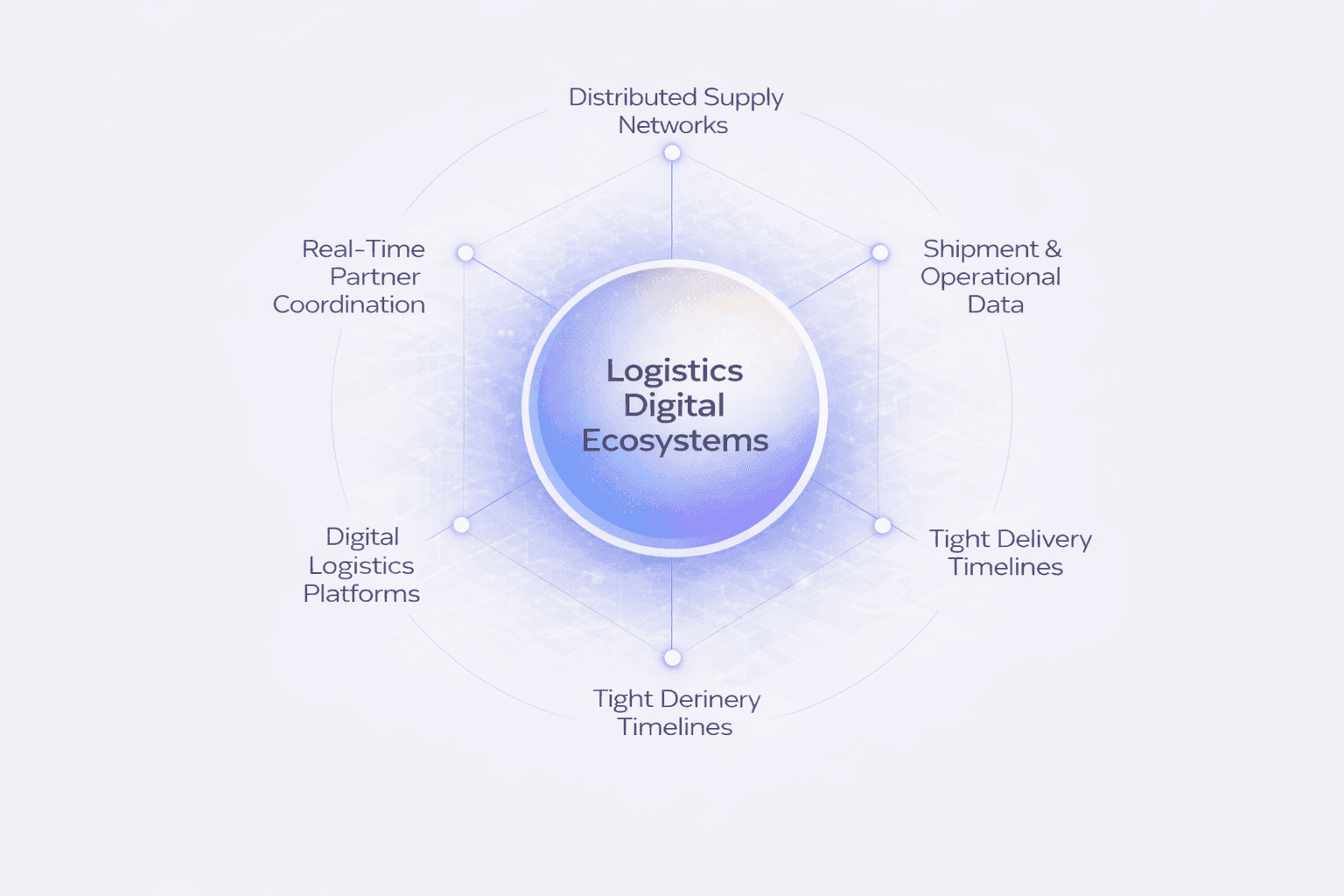
- Distributed supply chain infrastructure
- Large volumes of shipment and operational data
- Real-time coordination between multiple partners
- Tight delivery timelines and service expectations
- Increasing reliance on digital logistics platforms
Operational challenges across logistics networks
Across logistics providers, transport operators, ports, and supply chain networks, teams face:
- Disconnected systems across fleet, warehouse, and partners
- Limited real-time visibility into shipments and delays
- Manual coordination between drivers, hubs, and operations teams
- Exceptions handled reactively instead of predictively
- Growing pressure to scale operations without increasing cost


Core digital capabilities for logistics operations
We design platforms that help logistics organizations monitor operations, coordinate supply chain activities, and make better operational decisions.
Digital platforms that provide real-time visibility into shipments and logistics operations.
Typical use cases
- Real-time shipment tracking
- Delivery status platforms
- Transport monitoring systems
- Customer shipment portals
Operational focus
Operational visibility and transparency
Centralized systems that unify logistics and operational data.
Typical use cases
- Logistics data integration
- Supply chain analytics platforms
- Operational dashboards
- Predictive logistics analytics
Operational focus
Data-driven operational insights
Digital systems that improve warehouse operations and coordination.
Typical use cases
Warehouse management systems- Inventory tracking platforms
- Order fulfillment coordination
- Warehouse analytics tools
Operational focus
Operational efficiency
Integration layers that connect logistics systems, partners, and operational platforms.
Typical use cases
- Partner system integration
- Transport management integration
- ERP and logistics platform connectivity
- Data pipelines across supply chain systems
Operational focus
System interoperability
Platforms that provide leadership teams with insights into logistics performance and operational efficiency.
Typical use cases
- Delivery performance dashboards
- Supply chain analytics
- Operational risk monitoring
- Logistics planning insights
Operational focus
Data-driven logistics decisions
Platforms designed with security, auditability, and compliance built in.
Typical use cases
- Cross-border logistics platforms
- Regulated transport environments
- High-value or sensitive shipments
Operational focus
Trust, compliance, and operational resilience.
Delivering reliable platforms for logistics operations
Logistics platforms must support real-time operations while remaining scalable, reliable, and adaptable to evolving supply chain demands.
Delivery principles
- Platforms designed for real-time logistics operations
- Scalable architectures for high operational volumes
- Secure integration across logistics ecosystems
- Reliable infrastructure for mission-critical logistics systems
Operational outcomes for logistics organizations
Modern logistics platforms enable organizations to operate more efficiently and improve visibility across the supply chain.
- Real-time visibility across logistics networks
- Improved coordination across operational teams
- Faster delivery and fulfillment processes
- Reduced operational inefficiencies
- Better data-driven logistics planning









Explore how digital platforms can improve logistics operations
Let’s discuss how modern digital systems can support supply chain coordination, shipment tracking, and logistics analytics.